Principle species colonised
Occasionally on other broadleaved trees, although not widely documented.
Area affected
The buttress and roots are impacted.
Type of decay
Though little documented, it is believed to involve selective delignification followed by more severe deterioration, resulting in a brittle, dry, or pasty nature.
Fruit body and other fungal structures
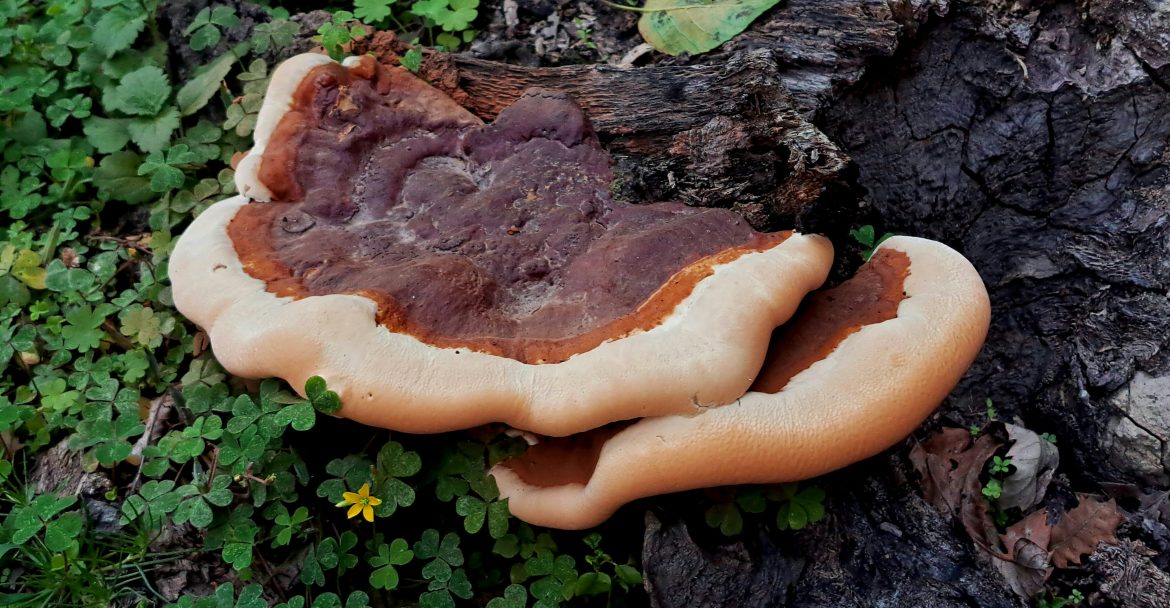
An annual fruit body that is originally primarily a pore layer and has a creamy-white, spherical shape that eventually resembles a bracket. The upper surface, which develops later, is a deep chestnut brown with a noticeable white border and a glossy crust. either without a stalk at all or with a very small one.At first, the pore surface is likewise creamy-white, but it eventually turns dark cinnamon. In contrast to the pale cinnamon flesh, the tubes are likewise dark cinnamon.
The brackets typically endure for a year or two before breaking up after a few months.
There is little information available about the developmental season.
Impact / Effect / Significance
The fungus can move into previously sound sapwood, which is likely why the deterioration can spread widely. Uprooting or stem breakage may occur if the rot is both severe and widespread.