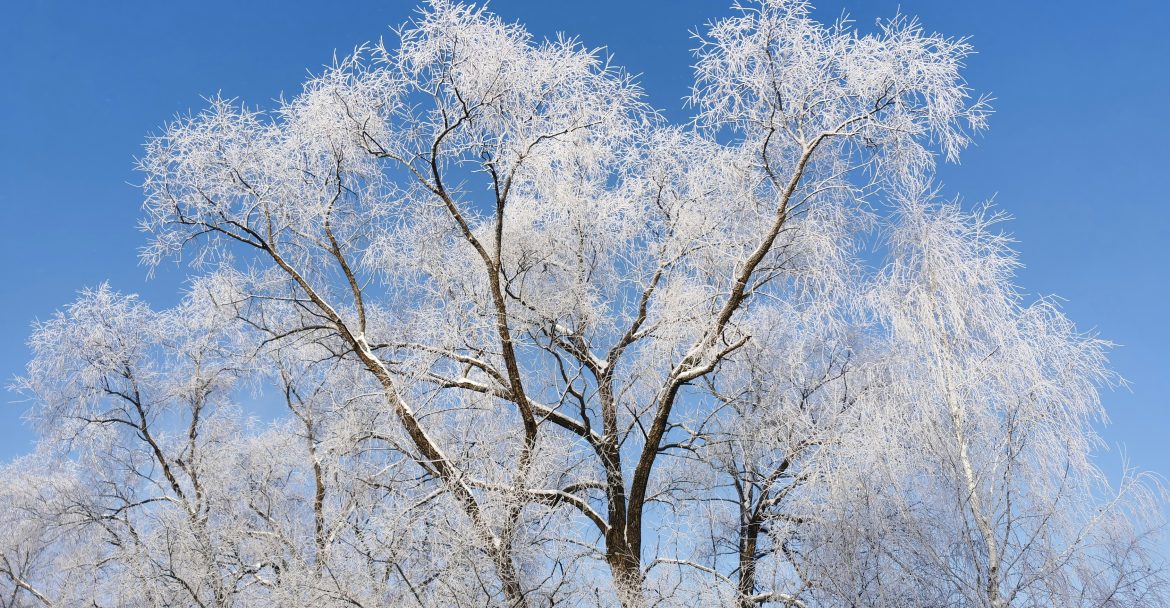
Technical Analysis: Impact of Frost on Arboreal Structures
Frost damage occurs when water freezes within plant tissues, leading to cellular dehydration, physical rupture, and localized necrosis. While trees possess biological defenses, sudden thermal shifts or extreme cold can overwhelm these systems, compromising the health and productivity of the specimen.
I. Physiological Impact by Tree Structure
The severity of frost damage varies depending on the specific tissue type and its current stage of development.
II. Biological Defense Mechanisms
Trees utilize several complex strategies to mitigate the effects of sub-freezing temperatures:
-
Dormancy & Hardening: A gradual physiological shutdown triggered by decreasing light and temperature.
-
Cryoprotectants: The synthesis of specialized sugars and proteins that lower the intracellular freezing point, functioning as biological antifreeze.
-
Cellular Pliability: Modification of lipid compositions within cell membranes to maintain flexibility and prevent rupture during ice crystal formation.
III. Critical Periods of Vulnerability
Damage typically occurs when a tree’s physiological state is mismatched with the ambient temperature.
-
Late Spring Frosts: The most destructive phase. Sudden cold hits tender, “soft” new growth and blossoms that have already emerged during early warm spells.
-
Early Autumn Frosts: Occurs when unseasonably cold weather arrives before new wood has “hardened off” (lignified), damaging succulent growth.
-
Winter Extremes: Rapid temperature fluctuations can cause the expansion and contraction of fluids within the trunk, leading to bark splitting.
IV. Diagnostic Indicators
-
Discoloration: Progressing from yellowing to deep brown or necrotic black.
-
Textural Changes: Mushy blossoms, drooping stems, or “crispy” leaf margins.
-
Sectional Dieback: Death of specific branches or entire canopy segments following a severe freeze event.