Principle species colonised
The primary species that was colonised large variety of broadleaved and coniferous trees.
Area affected
Found mostly on birch in northern Britain, but mostly on beech in southern Britain. Other broadleaves may be impacted.
Affected area mostly in big branches and stems.
Type of decay
Simultaneous white rot that breaks down lignin and cellulose at comparable speeds.
Fruit body / fungal structures
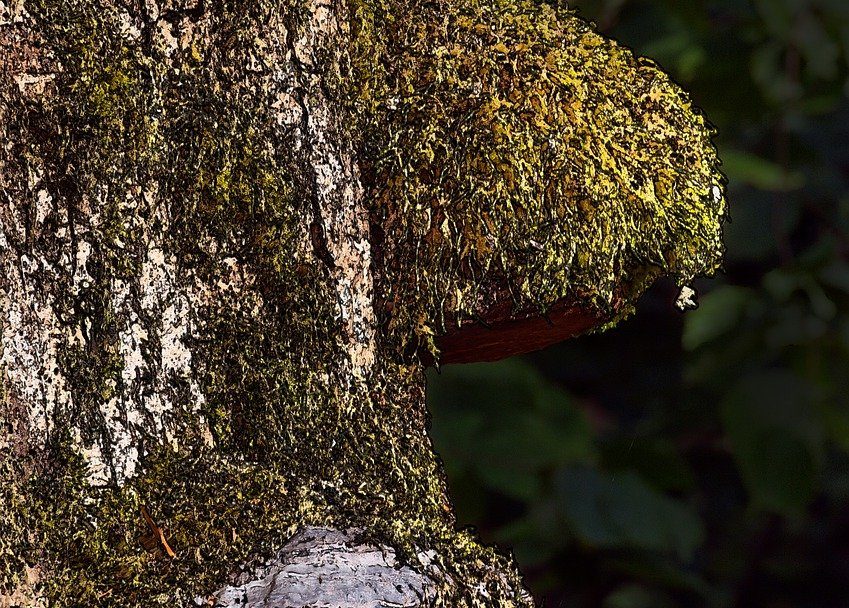
A perennial bracket that can reach a diameter of 500 mm; it is frequently hoof-shaped but can occasionally be flatter.
The colour ranges from dark grey (mostly on smaller species of birch) to pale (mostly on beech). (When wet, it might appear considerably darker.) When first created in the spring, the pore-bearing underside is beige; in the summer, it darkens to a faint rusty brown. The spores are white. The flesh has a felty texture and is cinnamon-brown on the inside. Seasonality and perseverance Every spring, a fresh layer of pore-bearing material is formed, and it frequently lasts for many years.
Significance / Effect / Impact
Large trees occasionally have enough remaining sound wood to stand for a long time, but affected wood soon loses tensile strength and becomes brittle.