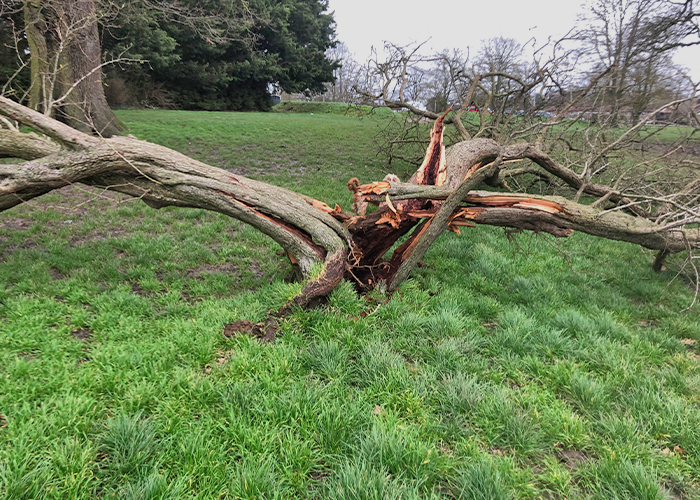
🚨 Tree Base Failure: Should You Save or Remove? 🌳
A tree that has “failed at the base” (meaning the lower trunk or main roots have broken or split) presents a severe structural issue. Here is a professional breakdown of the arguments for and against trying to save it.
Pros of Attempting to Save the Tree
-
Preservation of Mature Landscape: Saving a mature tree maintains established shade, aesthetic appeal, and property value that would take decades to replace.
-
Ecological Benefits: The tree continues to provide a vital habitat and food source for local wildlife (birds, squirrels, etc.).
-
Sentimental Value: Owners may have a strong personal or emotional attachment to the specific tree and want to avoid felling if at all possible.
-
Potential for Recovery (Limited Cases): If the damage is minor, caught immediately (within a day or two), the tree is young, the species is resilient (e.g., an oak rather than a softwood), and most of the root system is intact, a professional might be able to stabilize it with bracing and extensive aftercare.
Cons of Attempting to Save the Tree
Recommendation
A “failed at the base” diagnosis typically means removal is the only safe and practical solution.
You should consult a certified arborist immediately to assess the specific situation and recommend the safest course of action based on the tree’s location, species, and extent of the damage.