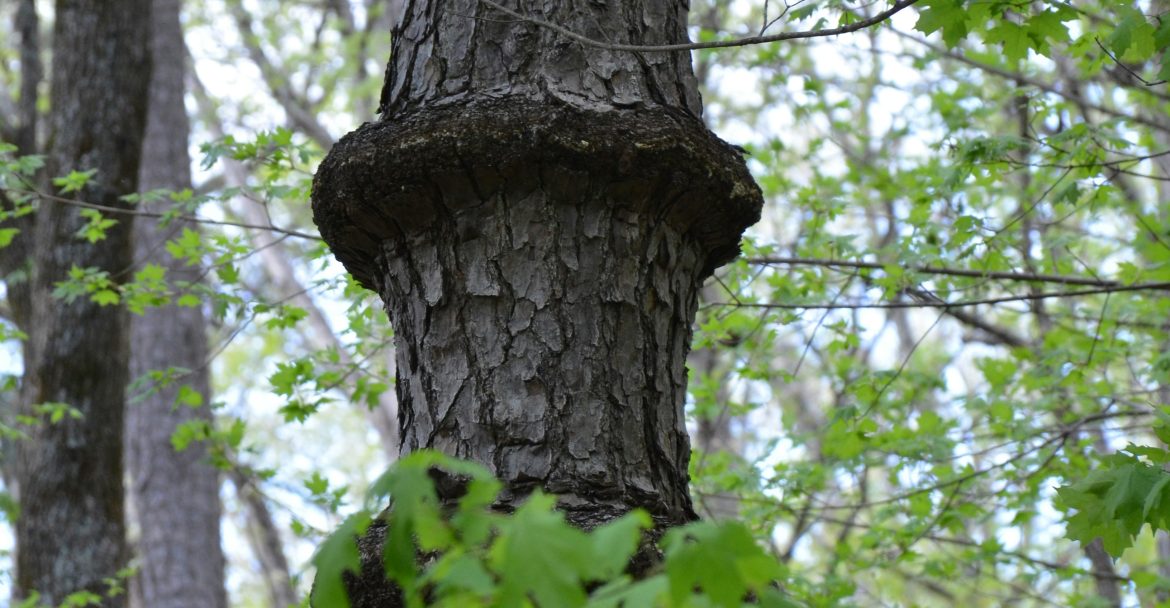
Assessment and Management of Basal Bulges in Trees
Bulges at the base of a tree—frequently characterized as compression bulges, “elephant foot,” or burls—are significant physiological markers. These growths typically represent a tree’s adaptive response to stress, mechanical injury, or structural instability. While some formations are benign, others serve as critical indicators of internal decay and potential failure.
1. Common Etiology of Basal Bulges
Understanding the root cause of a bulge is essential for determining the tree’s long-term viability.
-
Structural Compensation: When internal decay weakens the heartwood or root system, a tree may produce “reaction wood” at the base. This widens the footprint to increase stability, effectively acting as a natural buttress.
-
Burls (Abnormal Growth): These are dense, rounded outgrowths resulting from a disruption in the tree’s growth hormones, often triggered by fungi, bacteria, or dormant buds.
-
Mechanical Damage & Compaction: Physical trauma from lawnmowers or soil compaction from heavy machinery can disrupt the vascular cambium, leading to irregular, localized growth.
-
Included Bark: In trees with codominant stems (two trunks), a bulge below the junction often indicates a structural weakness where bark is trapped inside the union, pushing the stems apart.
-
Environmental Factors: Poor soil drainage or excessive planting depth can lead to an exaggerated or “swollen” root flare as the tree struggles for oxygen.
2. Risk Evaluation Protocol
Homeowners and land managers should perform a preliminary visual and physical inspection if a bulge is detected.
3. Professional Management Recommendations
Proper care is vital to ensure that a structural defect does not become a safety hazard.
-
Avoid Surgical Removal: Never attempt to cut off a burl or bulge. This creates a massive open wound that the tree may not be able to seal, inviting secondary infections and accelerated decay.
-
Consult Big Heart Tree Care: We can use specialised tools (such as a resistograph or sonic tomography) to differentiate between a harmless cosmetic burl and “fiber buckling” caused by structural load.
-
Establish a Protection Zone: Maintain a “no-mow” zone around the base. Use mulch (kept away from the actual trunk) to prevent mechanical damage from string trimmers and mowers.
-
Expose the Root Flare: Ensure that the base of the tree is not buried under “mulch volcanoes” or excess soil. The root flare should be visible to allow for proper gas exchange and to prevent bark rot.
Expert Note: A bulge is the tree’s way of talking to you. It is either a sign of strength (adding wood to stabilize itself) or a sign of struggle (reacting to disease). Identifying which one it is early can save the tree—and your property.