Principle species colonised
In the UK, usually restricted to oak and, less frequently, hornbeam
Area affected
Stem Base or Central root-plate.
Type of decay
Primarily a white-rot.
Fruit body / fungal structures
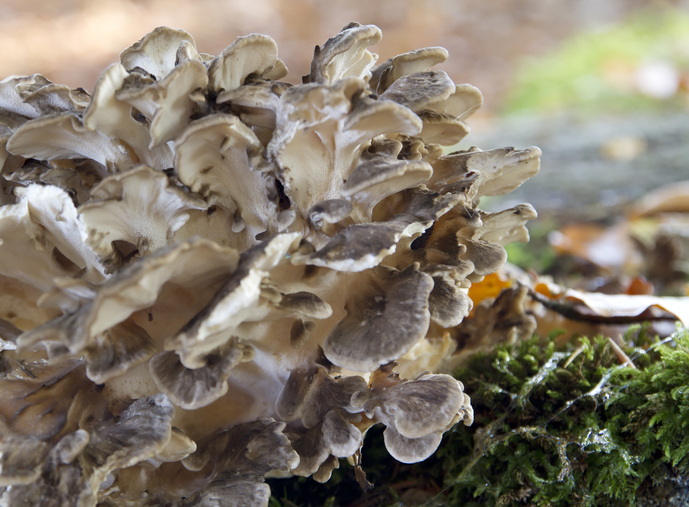
A mass made up of fan-like, overlapping, convoluted, and frequently splitting fronds, typically up to 300 mm across (but sometimes much larger). These develop between the buttresses or on the ground above the afflicted roots.
White borders surround brownish-grey upper surfaces. Unlike those of Meripilus giganteus, the pore-bearing surfaces beneath are white and do not bruise dark. The flesh and tubes are initially white, but as they age, they get darker. The spores have a whitish appearance.
The annual fruit bodies primarily grow from midsummer to autumn before rapidly deteriorating once they reach maturity.
Significance / Effect / Impact
A tree can endure for many years if the fungus is limited to the centre of the rootplate.
When fruit bodies appear on the ground above damaged roots or in between buttresses, it is possible that more severe decay will result in basal fracture or uprooting. Similar to other butt- and root-rots,