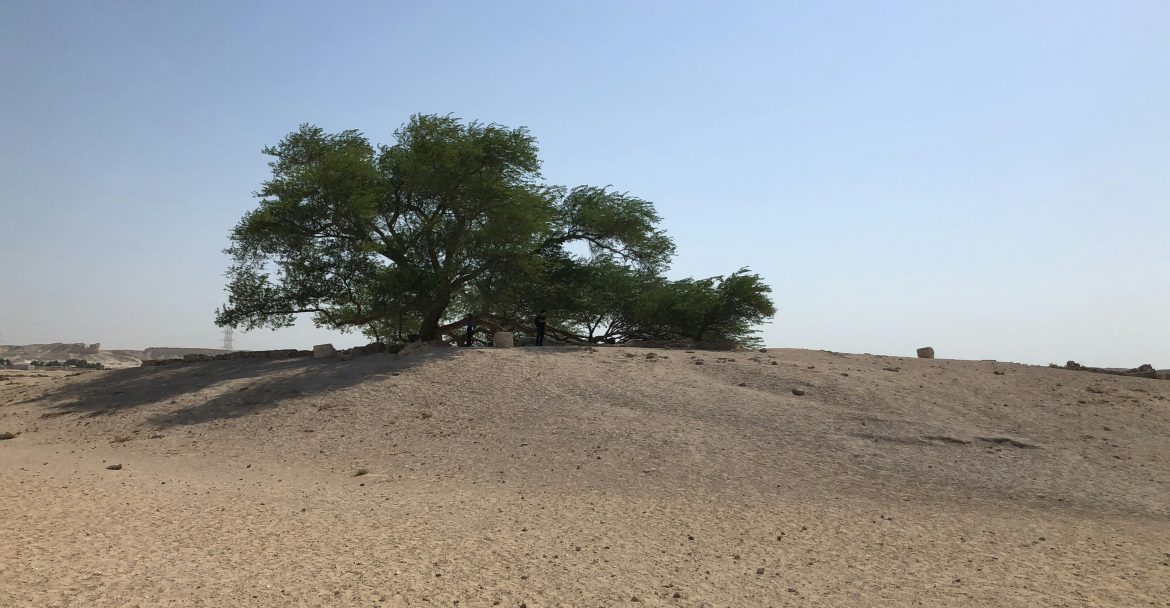
The Emerald Sentinel: Bahrain’s Impossible Survivor
In the scorched heart of the Sakhir Desert, where the horizon dissolves into a shimmering haze of heat and sand, stands an impossible survivor. This is Bahrain’s Shajarat-al-Hayat—the Tree of Life. For over 400 years, this solitary mesquite (Prosopis juliflora) has flourished in a landscape of brutal desolation, maintaining a lush, emerald canopy against a sky that yields almost no rain.
A Biological Enigma
Standing ten meters tall against the monochromatic dunes, the tree is a living masterclass in desert adaptation. While the surrounding sands are void of visible water, the Tree of Life remains vibrant, an anomaly that has puzzled botanists for generations. Some researchers suggest its roots penetrate more than 50 meters into the earth to tap into prehistoric aquifers; others point to the tree’s uncanny ability to extract moisture from the humid Gulf breezes. To the local people, it is more than a plant—it is a potent symbol of resilience, often whispered to be the last remaining vestige of the Garden of Eden.
Expedition Log: Navigating the Sakhir
For those seeking to witness this desert sentinel, the journey leads away from the glass towers of Manama and into the ancient, silent southern reaches of the island.
-
The Path Taken: Located roughly 40 kilometers south of the capital, the tree stands near Jebel Dukhan, Bahrain’s highest point. The final approach involves navigating sun-baked dirt tracks; while accessible to standard vehicles, drivers must remain wary of the “soft” sands that can ensnare the unwary.
-
A Modern Sanctuary: Once a remote secret, the site now features a contemporary visitor center and amphitheater. These facilities provide critical security and context to the thousands of pilgrims who come to stand in the shadow of this 400-year-old monument.
-
The Golden Hour: To capture the tree at its most majestic, timing is everything. Arriving at dawn or late afternoon allows visitors to escape the peak desert furnace and witness the low sun igniting the green leaves against the amber dunes.