🌲 Professional Assessment: Pros and Cons of Utilizing a Tree Shear

🌲 Professional Assessment: Pros and Cons of Utilizing a Tree Shear on a craine

A tree shear is a specialized mechanical attachment designed primarily for rapid land clearing and the harvesting of small-diameter wood. While offering significant advantages in speed for high-volume work, its mechanical cutting action introduces substantial risks related to tree health and cut quality.


✅ Pros of Using a Tree Shear

Key Advantage Detailed Benefit
High Efficiency & Speed Tree shears are substantially faster than manual felling methods, enabling the processing of high volumes of small trees, brush, and woody debris in a significantly reduced timeframe.
Reduced Manual Labor & Improved Safety Operating the shear from the machine’s cab removes the need for strenuous and hazardous manual tasks involving chainsaws or working at height. This drastically lowers the risk of common work-related injuries, such as cuts, strains, or falls.
Handling Difficult Material They are highly effective for safely clearing structurally compromised material, such as diseased, dead, or brittle trees that would be too dangerous or unpredictable to fell manually with a chainsaw, although a similar method can be achieved with a Cherry Picker.
Versatility in Clearance Tree shears are suitable for various high-volume applications, including roadside vegetation management, clearing field and utility line edges, site preparation, and accessing dense or confined areas (e.g., reaching over fences).
Controlled Felling Many modern tree shears include a grab or grapple function, allowing the operator to securely cut, hold, and precisely place the harvested tree or branch. This provides a much safer and more controlled alternative to traditional uncontrolled felling.

⚠️ Cons of Using a Tree Shear

Key Disadvantage Detailed Challenge
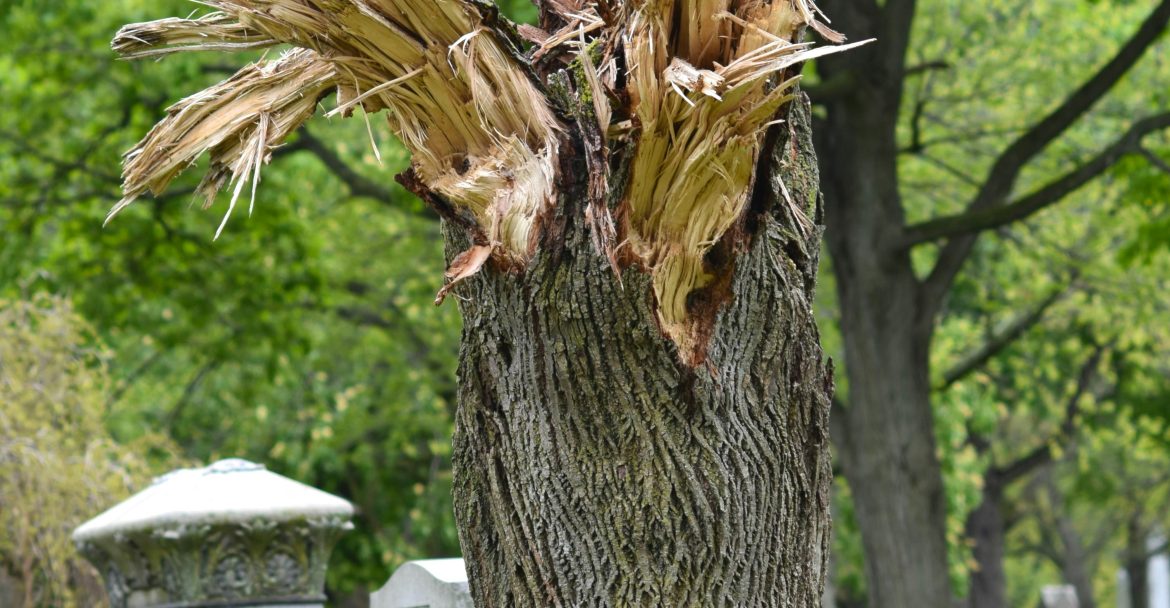
Poor Cut Quality & Tree Health Impact The mechanical, often guillotine-style action of a tree shear frequently crushes wood fibers, resulting in rough, uneven, or torn wounds on live wood. This improper cut prevents the tree from forming a proper wound-wood barrier, leaving it highly susceptible to fungal diseases, pests, and decay.
Not Suitable for Detailed Pruning Tree shears are fundamentally ill-suited for arboricultural pruning. They perform a non-selective shearing action (best for mass hedge shaping), failing to deliver the selective, proper cuts necessary for healthy tree structure, branch collar preservation, and the removal of specific dead or diseased branches from within the canopy.
Requires Skilled Operation Although simple in function, operating a shear to minimize damage and maximize efficiency requires a competent and experienced operator. The increasing availability of this equipment has arguably led to a drop in operational standards among inexperienced or unskilled users.
Potential Structural Damage to Remaining Tree Improper alignment or making cuts in the wrong location can inflict severe structural damage on the remaining tree stem. This can create weak points that are prone to failure or stimulate excessive, poorly attached growth (e.g., water shoots) that compromise the tree’s long-term structure.
Not Ideal for Timber Production The crushing nature of the shear cut can physically compromise the quality and shape of the stump and the end timber product. This makes the harvested wood less desirable or unusable for commercial forestry applications where appearance, dimension, and wood integrity are critical.


In conclusion, while the tree shear provides exceptional speed and safety benefits for high-volume land clearing operations involving small or dead woody material, its mechanical cutting action introduces an unacceptable risk to long-term tree health. The creation of ragged, crushed wounds fundamentally compromises the tree’s natural defense mechanisms, leaving it vulnerable to disease and decay. For any project prioritizing the health, structural integrity, or aesthetic value of remaining trees—and particularly for high-quality timber harvesting or proper arboricultural pruning—the tree shear is a detrimental tool that should be avoided in favor of precise, conventional cutting methods. The inherent damage often outweighs the fleeting efficiency gained.