Essential Trees for Pollinators: A UK Selection Guide
To effectively support biodiversity, a landscape should provide high-quality nectar and pollen throughout the growing season. Native species are particularly valuable as they have co-evolved with local insects, offering the most compatible resources for bees, butterflies, and moths.
Top-Rated Native Species
These foundational trees support hundreds of insect species and are critical for local ecosystems.
-
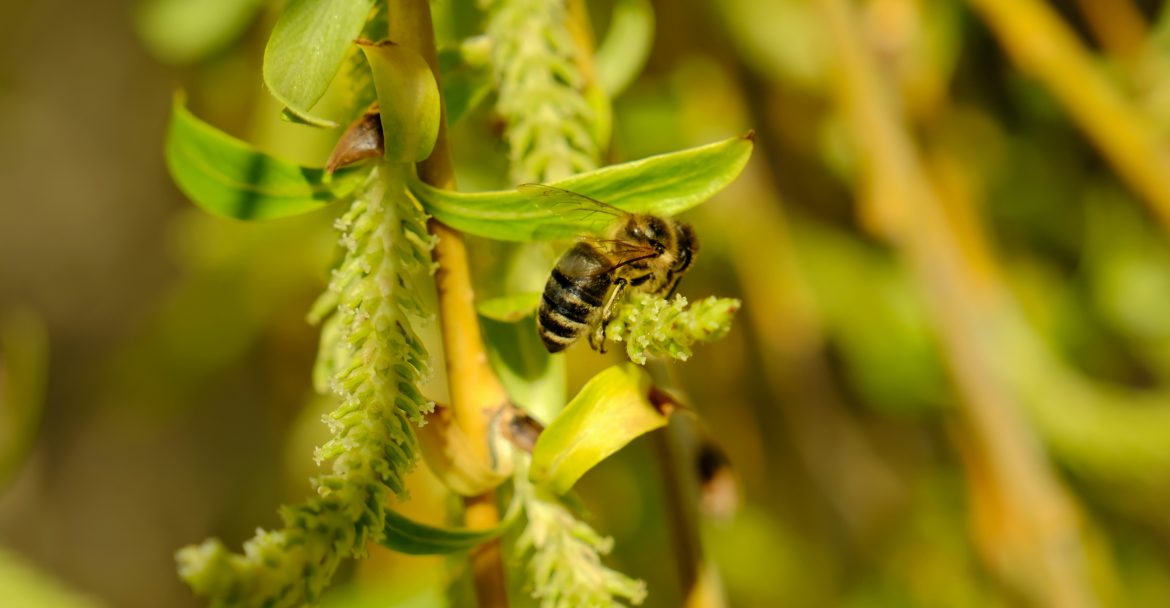
Goat Willow (Salix caprea): Vital for early spring; its “fluffy” male catkins provide essential protein-rich pollen for bees emerging from hibernation.
-
Rowan (Sorbus aucuparia): A high-impact tree featuring creamy-white spring flowers for pollinators and autumn berries for birds.
-
Hawthorn (Crataegus monogyna): A British staple; its dense blossoms support a wide variety of insects, including specialist mining bees.
-
Crab Apple (Malus sylvestris): Offers sweet-smelling spring blossom that serves as a primary forage source for honeybees and solitary bees.
Dual-Purpose Fruit Trees
Fruit trees provide a “double dividend” by feeding both humans and beneficial insects.
Ornamental & Garden Varieties
Selected for aesthetic appeal, these varieties offer significant ecological benefits, particularly during nectar gaps.
-
Linden / Lime (Tilia species): Renowned for high nectar production and a heady scent in late summer.
-
Strawberry Tree (Arbutus unedo): Provides a rare, valuable source of late-season nectar when other flowers have faded.
-
Juneberry (Amelanchier lamarckii): A compact garden favorite with delicate white flowers that feed bees in early spring.
-
False Acacia (Robinia pseudoacacia): A fast-growing tree with fragrant early-summer flowers highly attractive to honeybees.