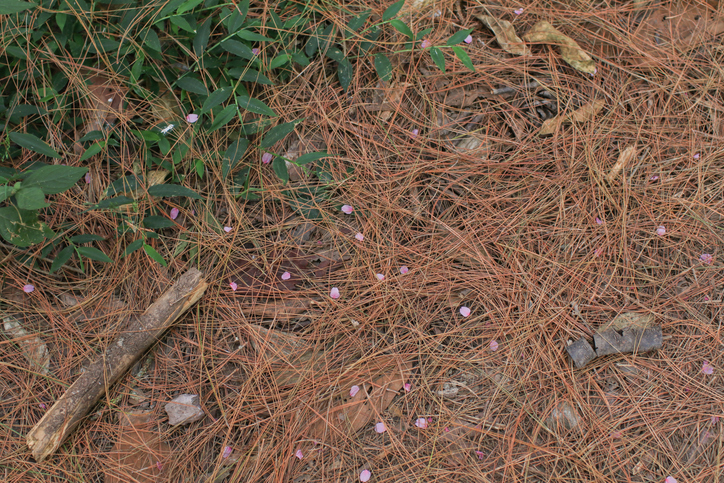
Establishing Turf and Ground Cover Beneath Conifers
An Overview of Environmental Challenges, Soil Remediation, and Alternative Landscape Solutions
Establishing a healthy lawn beneath conifer trees presents a distinct set of horticultural challenges. Turfgrass typically fails to thrive in these zones due to a combination of three primary factors: dense shade from the low-hanging canopy, severe root competition for moisture from shallow tree roots, and acidic soil conditions driven by the accumulation of decaying needles. The conifer canopy effectively acts as a barrier, blocking both sunlight and rainfall, while the tree’s root system aggressively extracts the remaining ground moisture.
If you are committed to establishing green growth in these challenging areas, a systematic approach to soil, light, and species selection is required.
Phase 1: Canopy and Soil Remediation
Before introducing any seed, the microclimate beneath the tree must be altered to support new growth:
Canopy Elevation: Prune the lowest branches of the conifer. Raising the canopy allows horizontal sunlight to reach the ground floor during the morning and late afternoon.
Debris Management: Regularly rake and remove fallen needles. If left unchecked, they form a dense mat that smothers emerging growth and prevents moisture infiltration.
Soil pH Correction: Use a standard pH testing kit to evaluate the soil. Conifer zones are often highly acidic; if the test confirms a low pH, apply garden lime according to package instructions to neutralize the soil and create a hospitable environment for turf.
Phase 2: Cultivation and Moisture Management
Standard turf mixtures will not survive in these conditions. To establish grass successfully, implement the following steps:
Select Shade-Tolerant Cultivars: Use a seed mixture featuring a high percentage of fine fescues (such as Creeping Red or Chewings Fescue). These varieties are uniquely adapted to dry, shaded environments.
Apply Top Dressing: Spread a 2 to 3-centimeter layer of nutrient-rich compost or high-quality topsoil over the bare ground before seeding to provide immediate nutrients.
Implement Aggressive Irrigation: Because mature conifer roots will rapidly absorb available water, standard watering schedules are insufficient. Irrigate the area thoroughly—utilizing a sprinkler for several hours per session—at least a few times a week to ensure moisture penetrates past the tree roots to the grass seedlings.
Phase 3: Sustainable Alternatives to Turf
Because maintaining traditional turfgrass under mature conifers demands persistent, year-round maintenance, transitioning to an alternative landscape design often yields superior, lower-maintenance results.
Option A: Organic Mulching
Suppress weed growth and clean up the look of the area by applying a clean layer of woodchip or bark mulch. This retains soil moisture for the tree and eliminates the need for constant watering and mowing.
Option B: Acid-Loving Ground Covers
Replace grass with shade-tolerant, drought-resistant ground covers that naturally thrive in acidic forest soils, such as:
Ivy (Hedera)
Spurge (Pachysandra)
Sweet Woodruff (Galium odoratum)
To help determine the most practical approach for your specific landscape, consider the maturity of your tree, your ideal maintenance level, and the current baseline of your soil chemistry.