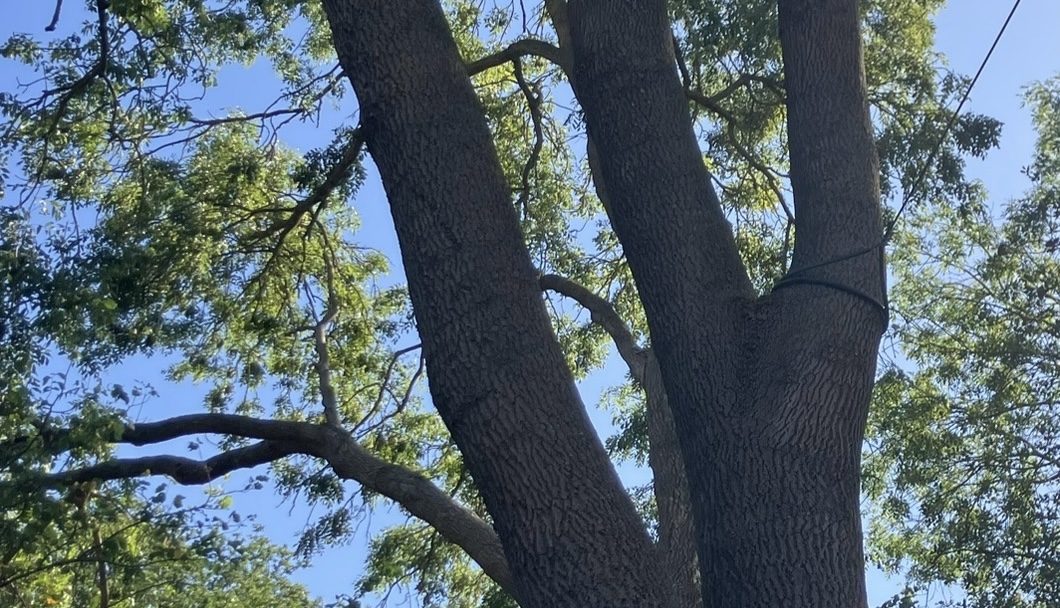
🌳 Tree Cabling and Bracing: Pros & Cons 🛡️
Cabling and bracing are methods used by arborists to provide supplemental support to structurally weak trees, often to prevent the failure of large limbs or co-dominant stems.
Pros
-
Safety & Stability: The primary goal is to prevent catastrophic failure of limbs or the entire tree, thereby protecting people and property from damage.
-
Extends Tree Life: Helps preserve valuable, historic, or sentimental trees that might otherwise need removal, allowing them to live longer and maintain landscape value.
-
Reduces Risk: Can be a good alternative to immediate tree removal when a tree is structurally weak but otherwise healthy enough to support the added cabling tension.
-
Maintains Structure: Helps trees maintain their natural shape and integrity, especially in high wind events, by supporting weak junctions or large limbs.
-
Allows Natural Movement (Dynamic Systems): Modern synthetic cable systems (like Cobra or established rope systems) allow some flex, which encourages the tree to continue its natural process of strengthening reaction wood.
Cons
Key Considerations
-
Professional Assessment: Always get a certified arborist to assess if cabling is truly needed, what type is appropriate, and if the tree is a suitable candidate for support.
-
Type Matters:
-
Dynamic systems (ropes/synthetic) allow controlled movement.
-
Static systems (steel cables, rigid rods) offer fixed, rigid support.
-
Neither is universally superior; the choice depends on the tree’s specific defects and needs.
-
-
Prevention is Best: Addressing structural issues early on with proper, corrective pruning is often a better and less costly long-term solution than waiting for the need for complex bracing and cabling.