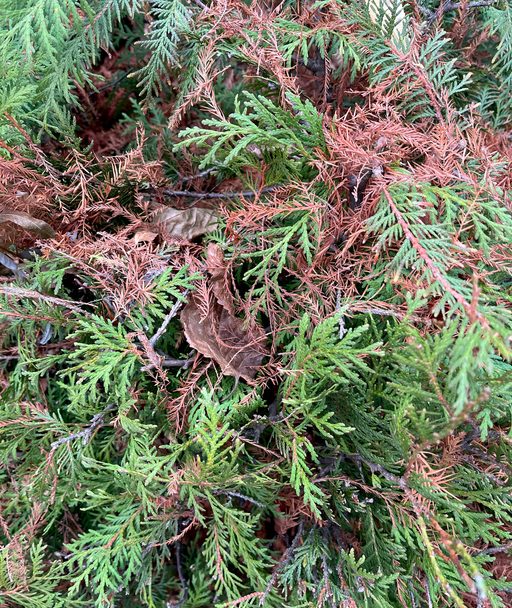
Conifer Health Guide: Diagnosing & Treating Browning Needles
If your conifer is turning brown, it could be suffering from environmental stress (such as waterlogging or drought), a fungal disease, or improper pruning. The key to saving the tree lies in identifying the specific location and pattern of the browning.
🔍 Diagnostic Chart: Identifying the Cause
Browning Pattern Potential Cause Action Required Interior Browning
(Needles closest to the trunk turn brown in late summer/autumn)
Natural cyclical shedding as older needles die off naturally. No action needed. This is a normal biological process. Random Patches / Dieback
(Branches dying off in random chunks)
Fungal issue (e.g., Pestalotiopsis or Phytophthora root rot), often triggered by waterlogged soil. Improve drainage immediately and prune out affected areas. Bottom-Up Browning
(Browning starts at the base and moves upward)
Salt damage (if near a gritted winter road) or poor soil drainage. Flush the soil with fresh water (if salt-damaged) or remediate heavy soil. Uniform Browning of a Clipped Hedge
(The entire outer layer or sheared face turns brown)
Over-pruning into old wood. Most conifers cannot regenerate from old, bare wood. Damage may be permanent. Note: Yew (Taxus) is a rare exception that can recover from hard pruning. 🛠️ Step-by-Step Recovery Plan
Follow these five steps to help your conifer recover and prevent further damage:
1. Inspect for Pests
Action: Check the brown branches closely for tiny mites or aphids (such as the Cypress aphid), particularly during the spring.
Remedy: If you spot an active infestation, treat the tree with a suitable, conifer-specific pesticide.
2. Review Soil Drainage
Action: Conifers dislike sitting in heavy, compacted clay.
Remedy: If the soil is waterlogged, take steps to improve drainage. Hold off on any supplemental watering until the top few inches of soil have completely dried out.
3. Prune Carefully
Action: Carefully snip out visibly dead, diseased, or pest-infested branches.
Rule of Thumb: Always cut back to green growth. Never cut back into the bare, old wood, as it will not grow back.
4. Feed and Mulch
Action: Apply a general conifer fertilizer in late winter or early spring to boost nutrients.
Protection: Lay a 7.5 cm (3 inch) layer of well-rotted organic mulch around the base of the tree to regulate moisture.
Critical Note: Keep the mulch a few inches away from the main trunk to prevent bark rot.
5. Water During Dry Spells
Action: Severe drought can trigger delayed browning.
Remedy: If your area is experiencing a hot or dry spell, give the tree a deep, thorough watering to help it recover from moisture stress.