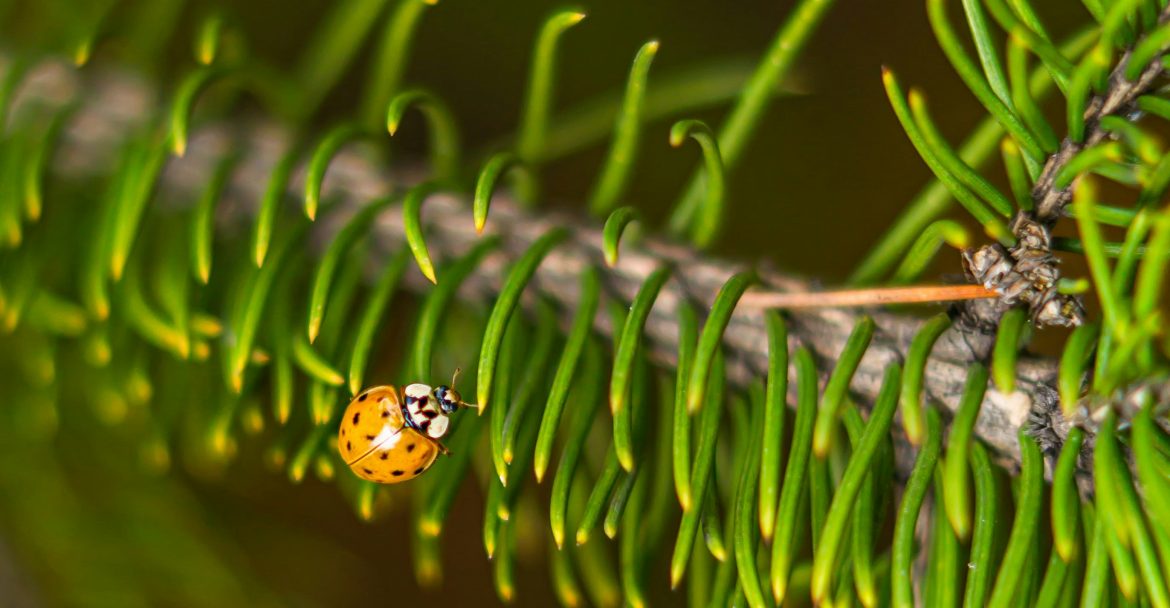
Ecological Overview: The Symbiotic Relationship Between Pine Trees and Ladybirds
Pine trees and ladybirds (ladybugs) share a vital, highly specialized ecological relationship. Coniferous forests provide critical shelter and overwintering habitats for these beetles. In return, several specialised ladybird species live almost exclusively within pine canopies, utilising the needles and bark as hunting grounds to control populations of aphids and scale insects.
Key Specialized Ladybird Species
While many ladybirds are generalists, certain species have evolved to depend entirely on the unique architecture of conifers—particularly the Scots Pine (Pinus sylvestris).
-
Pine Ladybird (Exochomus quadripustulatus): A small, predominantly black beetle characterized by distinctive, comma-shaped red markings. It is the most prevalent species found across needled conifers.
-
Eyed Ladybird (Anatis ocellata): Notably recognized as the UK’s largest ladybird species. It operates primarily high within the upper conifer canopy, where it aggressively hunts aphid colonies.
-
Striped Ladybird (Myzia oblongoguttata): A highly specialized species that is strictly dependent on mature Scots Pine ecosystems for its life cycle.
Ecological Benefits of Pine Habitats
Pine trees fulfill two primary biological requirements for these predatory beetles:
1. Microclimate and Winter Protection
The dense, evergreen foliage of conifers shields insects from severe weather, while the deep crevices in mature pine bark provide insulated, secure overwintering microhabitats. This allows ladybirds to safely hibernate through the colder winter months.
2. Specialized Foraging Grounds
Pines host specific populations of phytophagous (plant-eating) insects that serve as the primary prey for conifer-dwelling ladybirds.
Field Survey Methods: How to Locate Them
Because these species spend much of their time in the dense upper canopy of mature trees, observation requires specific field techniques:
Survey Tip: Focus observation efforts on branch tips, pine cones, and developing buds, as ladybirds naturally cluster in these high-forage areas.