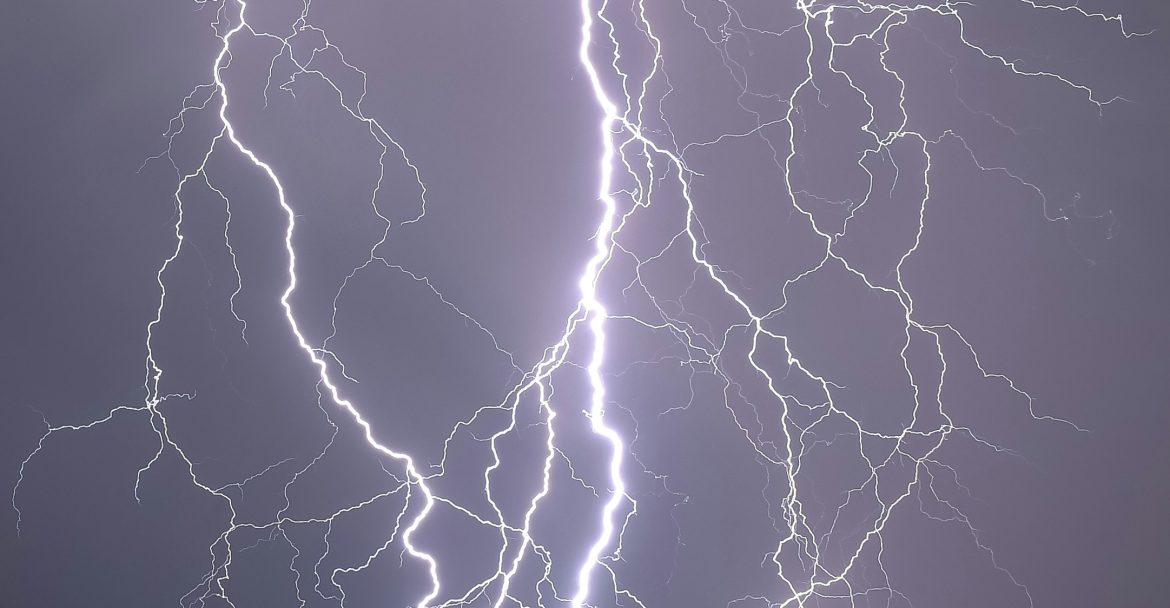
Document Brief: Lightning Dynamics and Arboricultural Impact in the UK
1. Mechanisms of a Lightning Strike on Trees
In the United Kingdom, lightning strikes disproportionately affect tall, solitary trees because the electrical charge naturally seeks the path of least resistance to the ground.
When a tree is struck, the electrical current travels just beneath the bark through the moisture-rich sapwood. This process instantly superheats the water within the cells. The resulting rapid thermal expansion often leads to:
-
Mechanical Failure: Shattering of the main trunk.
-
Bark Desiccation: Violent tearing and shedding of the outer bark.
-
Internal Combustion: Igniting fires deep within the heartwood.
2. Vulnerability and Tree Species Susceptibility
The severity of a strike depends heavily on the tree’s location and internal composition:
-
Species Susceptibility: Trees containing high levels of starch and moisture—such as Oaks, Elms, and Poplars—act as highly efficient conductors, making them exceptionally prone to explosive shattering. Conversely, trees with high resin content (e.g., certain conifer species) typically exhibit lower rates of explosive damage.
-
Height and Topography: While lightning does not exclusively target the highest point in a landscape, a tall, isolated tree remains the statistically most vulnerable target within an open area.
-
Historical Precedent: Notable UK heritage sites and botanical parks (such as those across Sussex) frequently record catastrophic damage or complete obliteration of ancient oaks and specimen redwoods during severe electrical storms.
3. Public Safety and Sheltering Protocols
Understanding lightning behavior is critical for field safety and risk management.
⚠️ Critical Safety Risk: The “Tree Trap”
Seeking shelter beneath a tree canopy during a thunderstorm is highly hazardous. If lightning strikes the structure, the electrical current can arc horizontally—a phenomenon known as a “side-flash”—striking and severely injuring anyone in the immediate vicinity.
Met Office Safety Guidelines
If caught in an exposed outdoor environment during a storm, adhere to the following official protocols:
-
Evacuate High-Risk Zones: Immediately move away from bodies of water, trees, utility poles, and large metal structures.
-
Seek Low Ground: Locate a low-lying area at a safe distance from potential targets.
-
Adopt the Lightning Crouch: Squat close to the ground with your hands on your knees and feet together. Touch as little of the ground’s surface as possible; do not lie flat.
4. Environmental and Ecological Impacts
While destructive, lightning strikes serve distinct ecological functions: