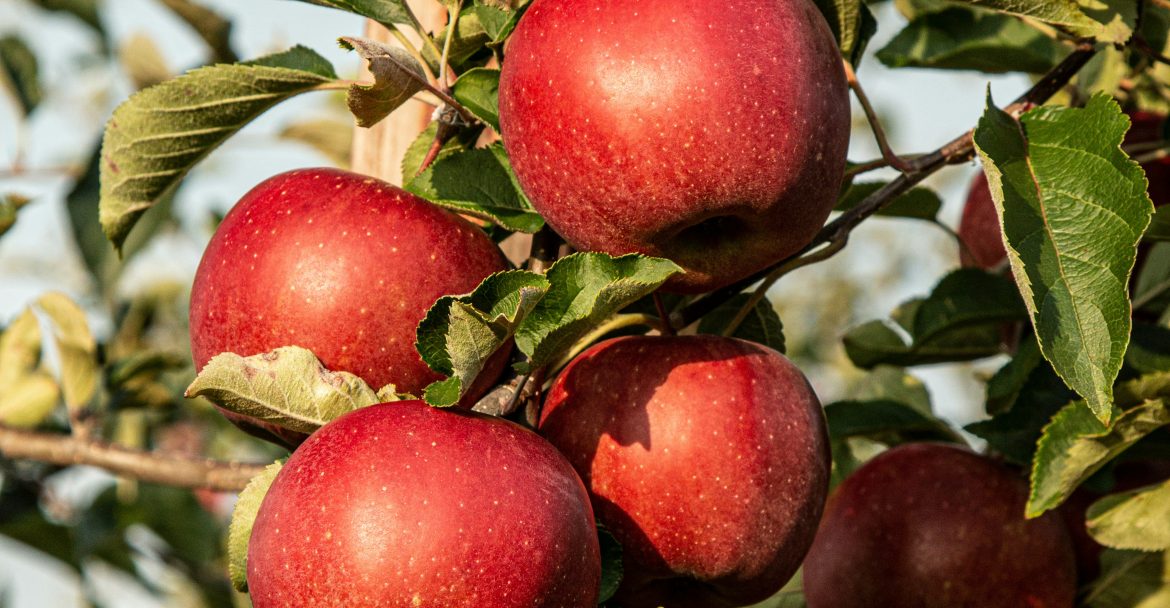
Hidden quietly within a residential backyard in Luton’s historic High Town, a botanical ghost from the past has stepped into the light. For nearly a century, an unassuming fruit tree weathered the changing English seasons, its roots intertwined with urban growth and forgotten gardens. It took only a humble donation of surplus autumn fruit in 2023 to spark a scientific journey that would rewrite local horticultural history.
When samples reached the laboratories of the National Institute of Agricultural Botany in Cambridge, genetic profiling revealed a living archive. DNA analysis traced the clandestine heritage of this nameless cultivar back to two 19th-century titans: the rugged Newton Wonder, born from a thatched roof in Derbyshire around 1870, and the celebrated Scottish heirloom James Grieve, dating to 1893.
This unexpected heirloom bears a complex flavor profile that evolves through the season—shifting from a sharp, vibrant tang to a mellow sweetness, and finally settling into a rich, wine-like depth when fully mature. It is a sensory echo of a bygone era when orchards punctuated the Luton landscape, a legacy previously touched only by local legend Alfred Hull’s 1950s creation, “Pam’s Delight.”
While archival maps and family historians continue to hunt for the elusive hand that originally planted the seed decades ago, the tree’s anonymity is drawing to a close. As the community weighs a shortlist of monikers—including Clarendon Blush and Luton Wonder—this resilient survivor proves that even the most ordinary-looking urban yards can still harbor extraordinary wild secrets.