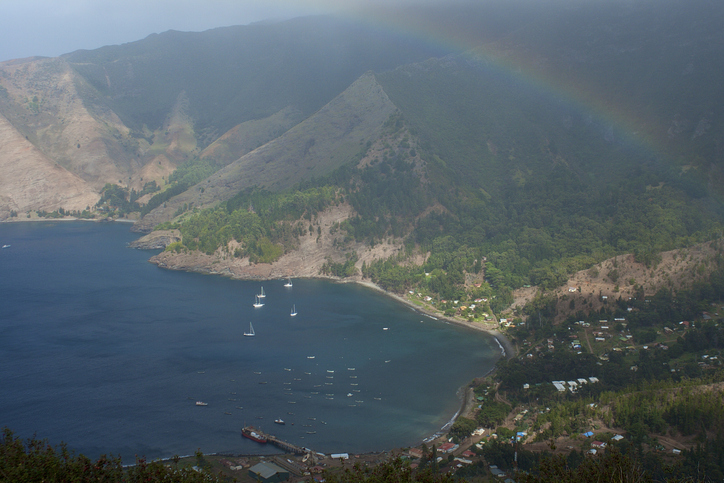
On a sheer, windswept cliff face rising from the South Pacific, a solitary sentinel clings to existence. This single, battered tree—suspended by ropes over a volcanic abyss—is the last known wild Dendroseris neriifolia, a rare tree daisy endemic to Chile’s remote Robinson Crusoe Island. Decimated by decades of feral grazing, encroaching invasive flora, and devastating wildfires, the species has hovered at the absolute edge of oblivion.
Now, a high-stakes international rescue operation offers a lifeline.
In a coordinated effort between Chilean researchers and British botanists, 29 precious seeds were harvested from the lone wild survivor and rushed to the Millennium Seed Bank at Kew Wakehurst. From that delicate yield, eight seedlings germinated—a triumph in the race against time. Two of these fragile descendants have now embarked on a journey across oceans to their new sanctuary: Logan Botanic Garden in the lush, Gulf Stream-warmed reaches of south-west Scotland.
A Coastal Refuge
Dumfries and Galloway may lie thousands of miles from the Juan Fernández Archipelago, but its mild maritime microclimate makes it an ideal stronghold for rare South American flora.
-
The Chilean Origin: A unique evolutionary lineage adapted to rugged, isolated island ecosystems, now reduced to a single wild individual.
-
The Scottish Haven: Logan’s frost-free conditions mirror the moisture and temperature profiles necessary for the seedlings to thrive.
-
The Global Strategy: The remaining six germinated seedlings will stay at Kew, splitting the population to safeguard against localized disease or catastrophic loss.
A Safeguard for Tomorrow
For conservationists, this transfer represents more than a botanical milestone—it is a vital genetic insurance policy.
“Experience shows that plant species from the Juan Fernández Islands do well at Logan,” notes Richard Baines, curator at Logan Botanic Garden. “Creating a safe place for these seedlings, getting to know them, and learning more about their adaptation gives us the chance to contribute so much more.”
As Diego Penneckamp of Jardín Botánico VerdeNativo emphasizes, saving the species remains an urgent race against extinction. By establishing a living sanctuary in the Scottish hills, scientists hope not only to preserve a unique piece of Earth’s natural heritage, but to ensure that the story of the world’s loneliest tree does not end on a precarious cliff edge.